
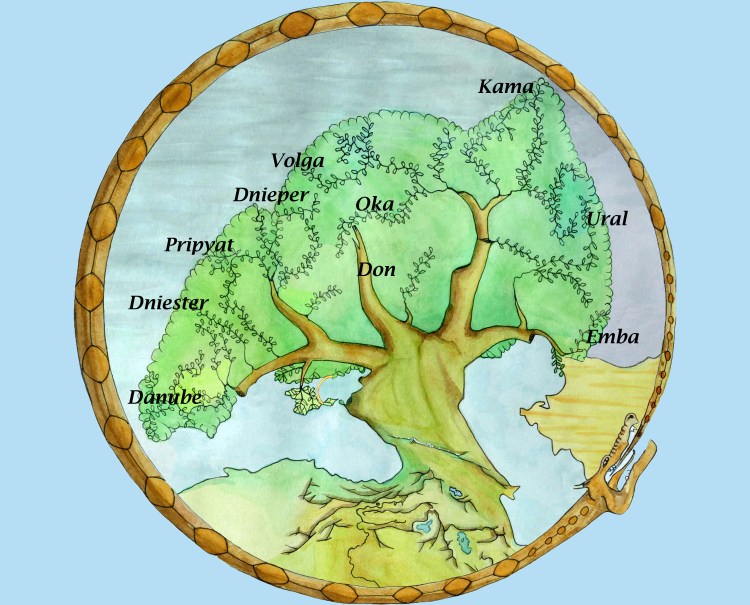
The Volga and Dnieper rivers drain a vast catchment area stretching from the Polish border east to the Urals. The Volga begins by flowing east until reaching the River Kama where it then turns to flow south. This major tributary is the first of many from the Urals that join the Volga which finally passes through a broad delta to enter the Caspian Sea. The Dnieper’s main tributary, the Pripyat, starts life close to the source of the River Bug whose waters flow in the opposite direction towards the Baltic.
This system of rivers creates a widespread network of highways, which is completed by the Don and Donet. These two rivers combine to flow into the Black Sea having drained the area left between the Volga and Dnieper catchments. These watery highways were exploited fully by the Vikings and are still important today but they were also crucial in the Bronze Age. This was an age when trading really took off and although this coincided with the domestication of the horse and the invention of the wheel, both were in their early stages and had yet to be perfected.
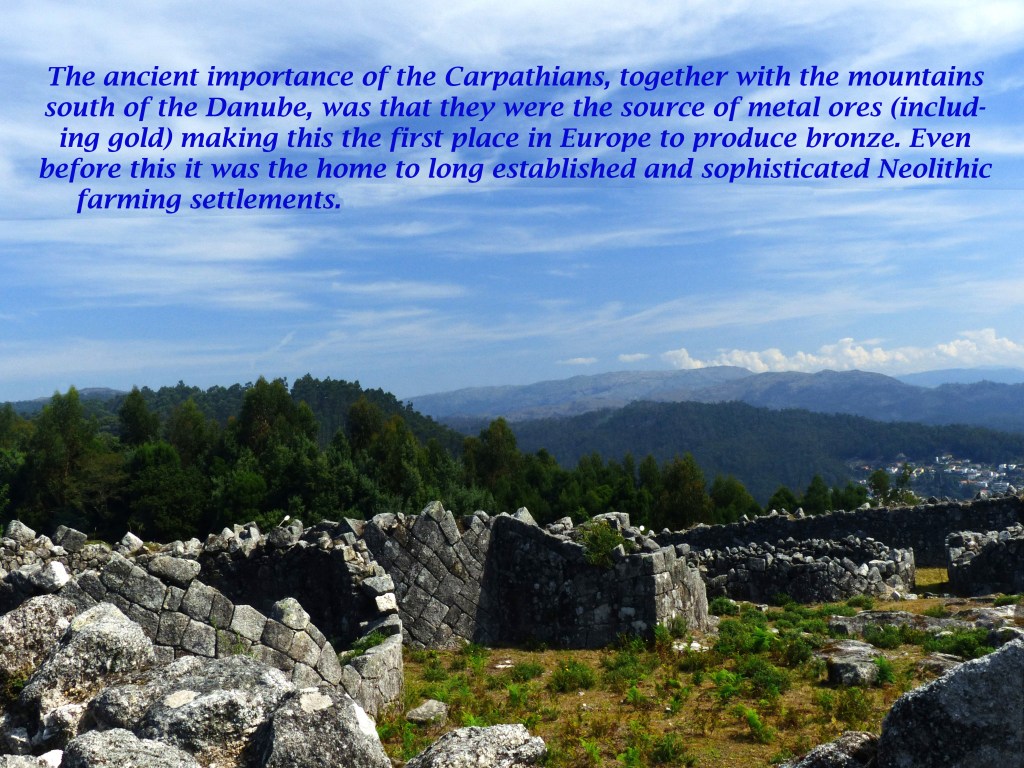
The lower Danube was not just a major highway but also the centre for Europe’s earliest copper production with metal ores, including gold, found in the surrounding mountains. This combination of fertile river valleys surrounded by rich resources also led to Europe’s first sophisticated culture living in large stable settlements. These densely packed villages must have seemed solid and imposing to the more mobile steppe cultures of the time and their ability to produce metals and other refined products like pottery would have made them appear to have magical powers.
These long river highways would also have aided the movement of people whether caused by warfare, climate change or simple opportunism. The recent breakthrough of extracting ancient DNA is quickly allowing a picture to emerge of large scale folk movements in the early Bronze Age along the main river valleys such as along the Danube to the Hungarian Plains and from the western Pontic Steppes to the shores of the Baltic via the Dniester and Bug Rivers.
 Yggdrasil and Middle World