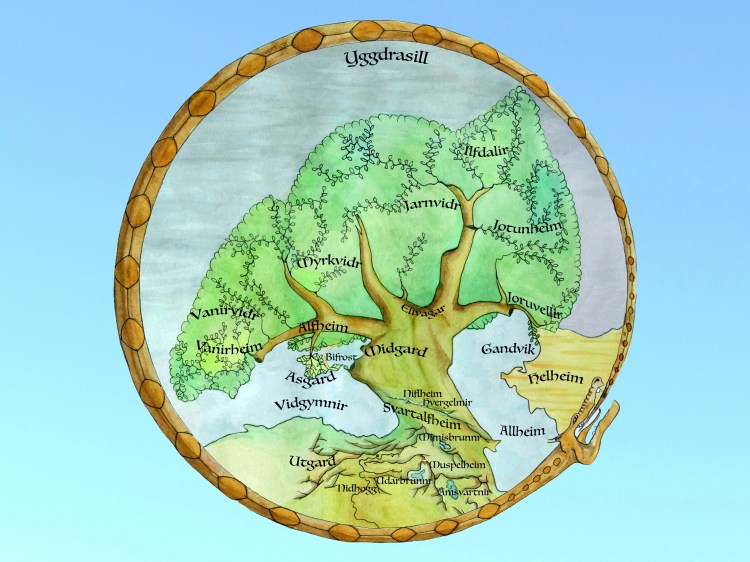

Looking back 5,000 years we have to try and forget modern day political and religious prejudices that divide the land that lies between the Black and Caspian Seas. We also need to ignore all past empires that dominated the region over the past few millennia and go back to a time which was mainly tribal. Yet these people were not backward or insular as they were involved in the latest advances and technologies of the time, which would give them an advantage over their neighbours. In fact it was a fast changing world, which encouraged people to move and exploit new opportunities and resources. In the 4th millennium BCE the development of new technologies such as the wheel and wagon, copper alloys, new weaponry, and new breeds of domestic sheep opened a whole host of opportunities.
Even the Greater Caucasus Mountains were not a barrier as tribes traded and also moved through the region connecting the steppes of the north with the urban centres of the south.The boundary between forest and farming around the flanks of the Caucasus and the flat dry plains of the steppe was significant for a time but this too was overcome with the development of less sedentary farming methods.
All this meant that there was also an inevitable mixing and movement of people making it difficult to decide who was influencing who and which tribes if any were dominant. These exchanges also meant that there was also significant genetic mixing making it difficult to say with certainty who were the proto Indo Europeans who later spread out east and west across the Old World. What they took with them though were not just new technologies but also language and myths which still link them today. There is a recognisable similarity between the language and themes of Norse sagas, Greek myths and Rigveda hymns suggesting they have a common root stretching back thousands of years very possibly to the early Bronze Age.
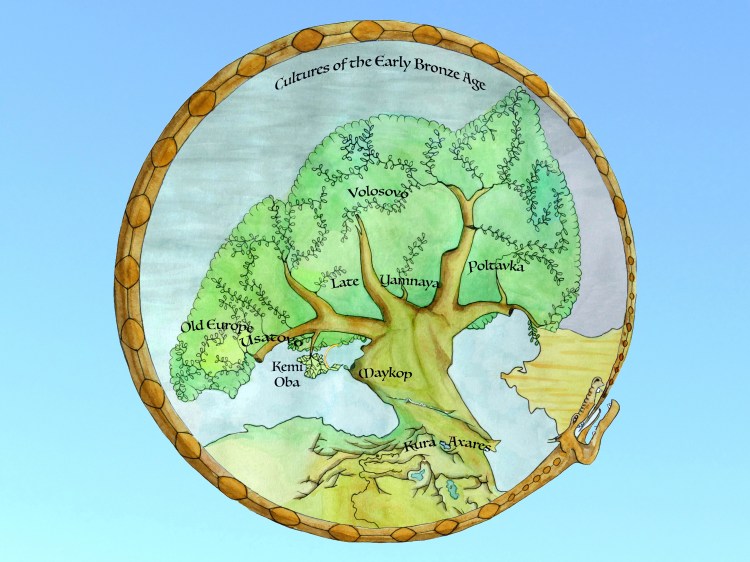

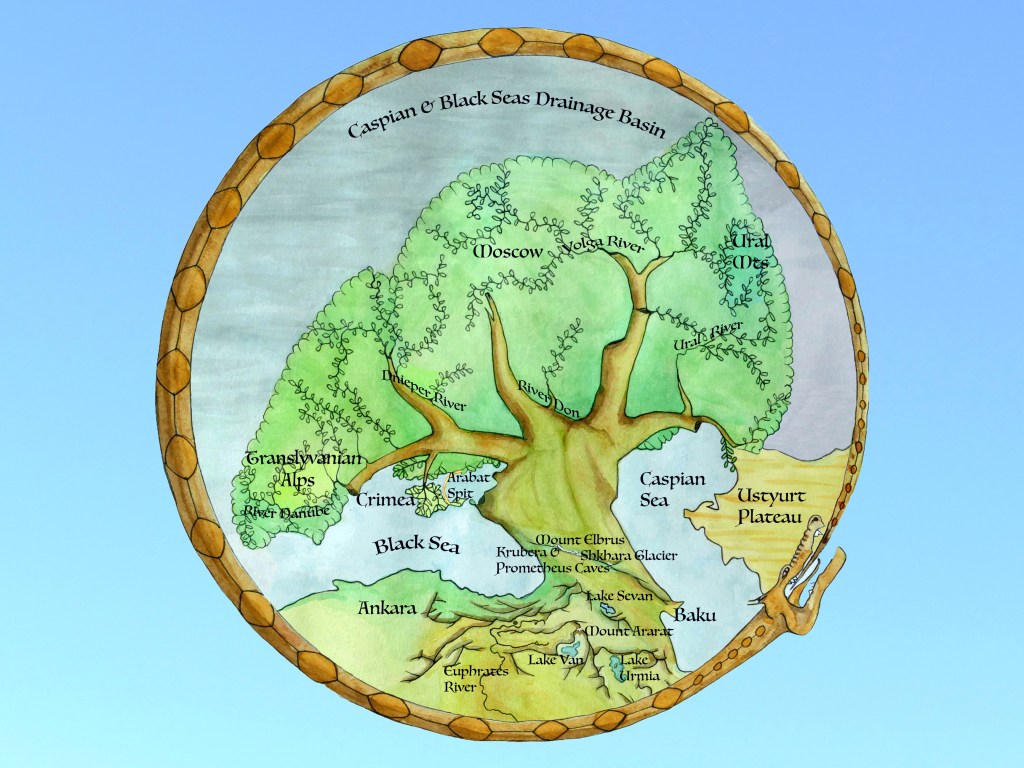
 Yggdrasil and Middle World