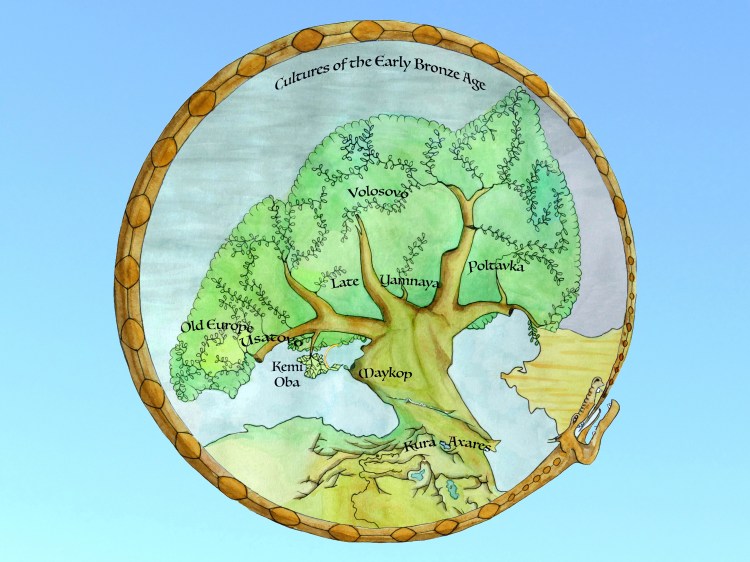
The Yamnaya in the early Bronze Age occupied the wide open grasslands between the Dniester and Ural rivers. Surrounding them were cultures quite different from their own. Some seemed older and more sophisticated living in large settlements and working metals others seemed less advanced living in forests as hunter-gatherers but all spoke languages that were fundamentally different from the steppe people.
The Yamnaya though only simple farmers were renowned as the people of the horse and the wheel. This was a formidable combination which would allow them, in time, to spread out from the steppes to colonise far off lands. Their presence was often marked by large burial mounds or kurgans standing out on the flat plains. Before this happened however they were probably in awe of the people who lived in the large settlements and daunted by the vast unbroken northern forests.
Close to the Yamnaya on the northern flanks of the Caucasus were a people we call the Maykop. Their expertise in producing early bronze items like axe heads would become crucial to the success of the Yamnaya. The Maykop, who lived close to some of Europe’s most specie rich forests, were able to produce an early form of bronze from a mix of copper and arsenic in reusable casts. This was in much demand even to people who were living in the urban centres far to the south of the Caucasus who had devised the world’s first pictographic script. Much closer to the Maykop, on the Crimea were people we call the Kemi Oba who were producing stela covered in pictographic symbols, which later are known to have spread along the northern shores of the Mediterranean as far as the Atlantic coast.
Another long established and sophisticated civilisation lived away to the west beyond the River Dniester. As with the people far to the south they too lived in large sophisticated settlements around which for centuries they had farmed the land. They also had access to precious metals like gold, silver and copper found in the mountains around them or from more distant locations up the Danube.
Despite only few people living in the northern forests exotic items such as amber, ivory and furs would emerge from them having been shipped many leagues along the great rivers when free of ice. In time even the Ural Mountains would become a source of the new sought after metals. The steppe people, who were restless and inquisitive, would over time infiltrate all these lands which surrounded them and learn and even adopt some of their ways including how to make and trade metals.
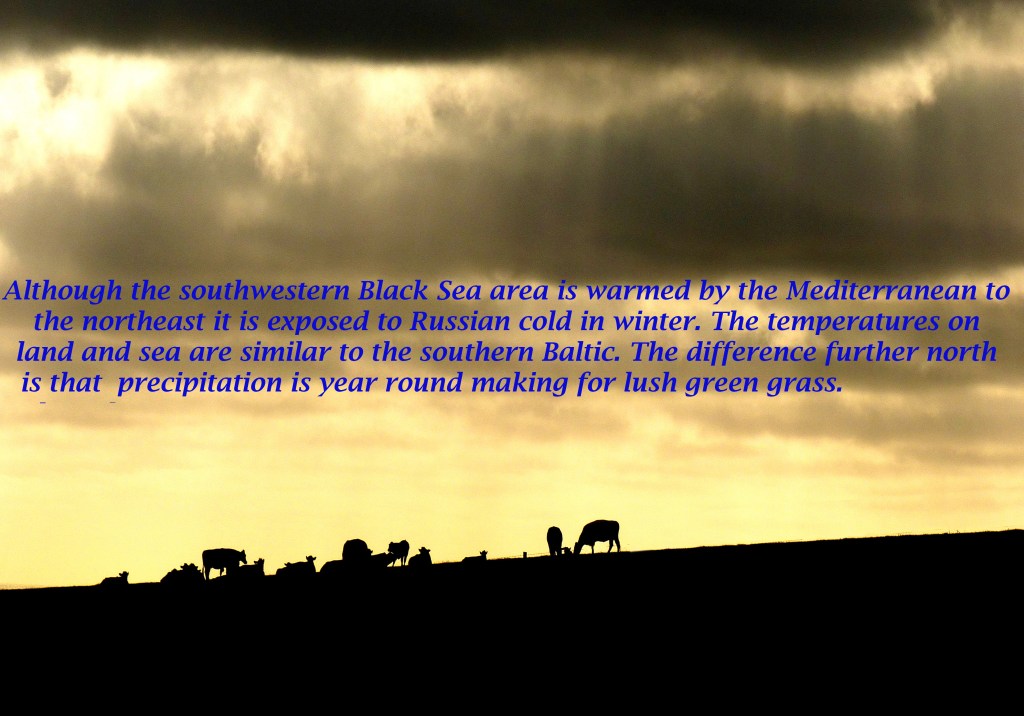
These new skills encouraged the Yamnaya to venture far and wide in search of new opportunities. Adapting to new farming methods such as dairy farming learnt from tribes around the shores of the Black Sea they then took these new skills and ideas with them as they pushed north along the Dniester and Dnieper rivers searching for new lands and opportunities on the plains of northern Europe where they found lush pastures along the Baltic shores.
 Yggdrasil and Middle World