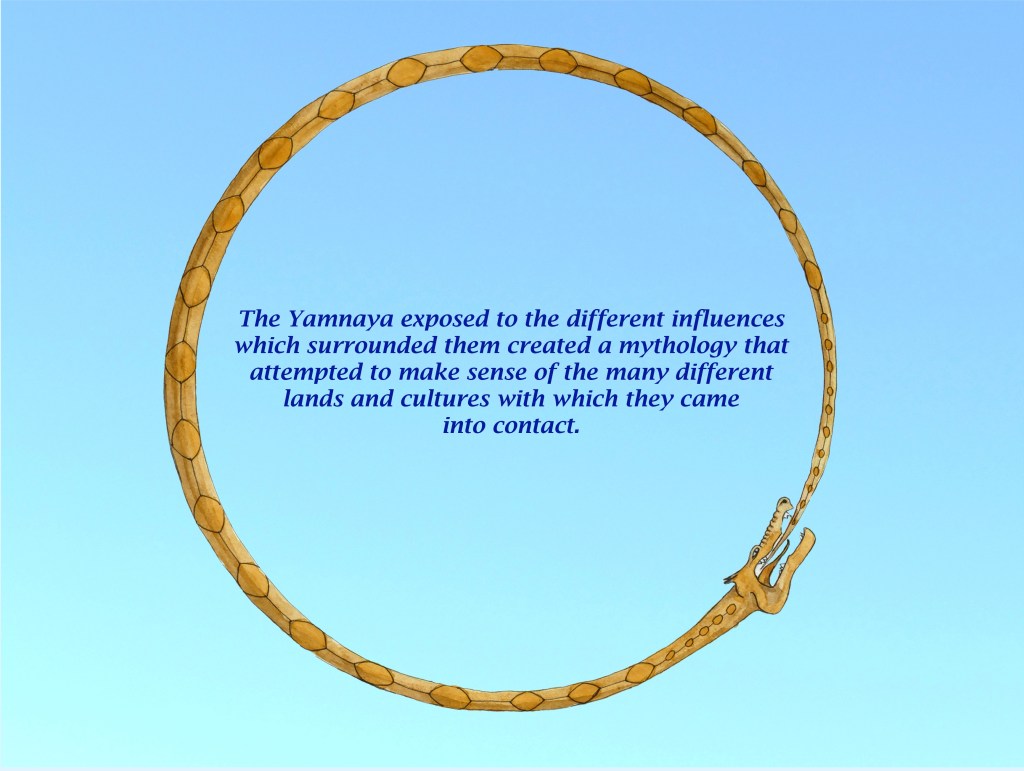

To understand their surroundings these simple yet adaptable steppe people would have had origin stories explaining where they came from, how the snowy southern mountains were formed and what lay beyond them in the exotic lands further south. These and the old civilisations on the fertile valleys away to the west would be a source of wonder to them. The skills of these older cultures in the earliest days of metalworking would have appeared to have been conjured up by sorcery.
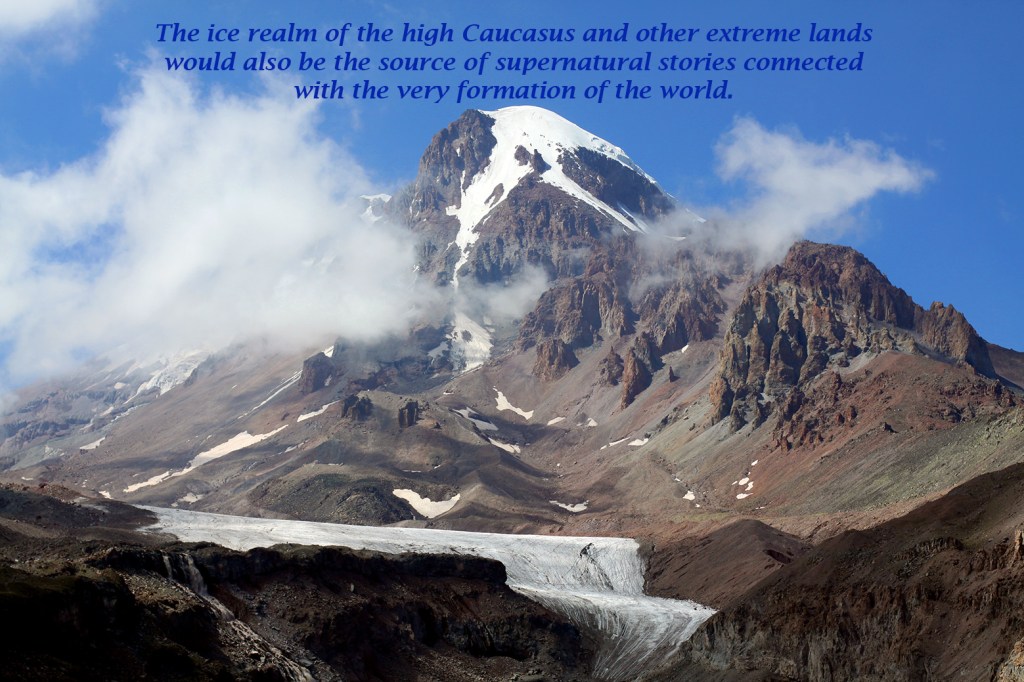
During cold phases of the climate glaciers in the central Caucasus had scoured out deep valleys, bulldozing debris before them to leave lakes and be the source of many rivers. The endless dark forests of the north would have been the home of frightening beasts. In contrast the harsh arid lands to the south across the Caspian Sea appeared so hostile, baked by a merciless summer sun and blasted by icy winter winds, that it could only have been the home of evil spirits.
The one break in the ice wall of the central Caucasus, but only open for half the year, was the high pass of the Darial Gorge overlooked by the imposing bulk of Mount Kazbek. This led to the fabled land of wine (Georgia) possibly the Yamnaya’s first access to alcohol. Beyond this fertile land was a labyrinth of deep valleys overlooked by dark volcanic crags. In its centre rising above all this, that twisted round it like the tangled roots of an enormous tree, rose the huge snow capped cone of Mount Ararat. This active volcano, which erupted during the early Bronze Age, overlooks three great lakes partly formed from other ancient eruptions.

 Yggdrasil and Middle World