
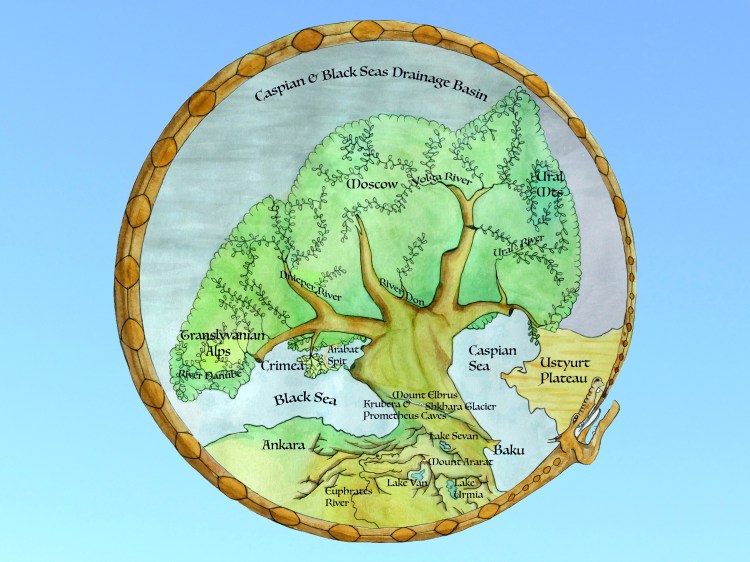
Scandinavia in prehistory was mostly a carpet of northern forest interspersed by sheets of water with a climate of long winters and short summers. This landscape and climate continues across the eastern extension of the North European Plain and it is necessary to travel far to the south to discover a break in this uniformity. The nine worlds of Norse mythology however are widely diverse with lands that are hugely contrasting yet can be close to one another. This would suggest the neck of land between the Black and Caspian Seas with which their distant ancestors were familiar in the early Bronze Age before they began to spread out across much of the old world.
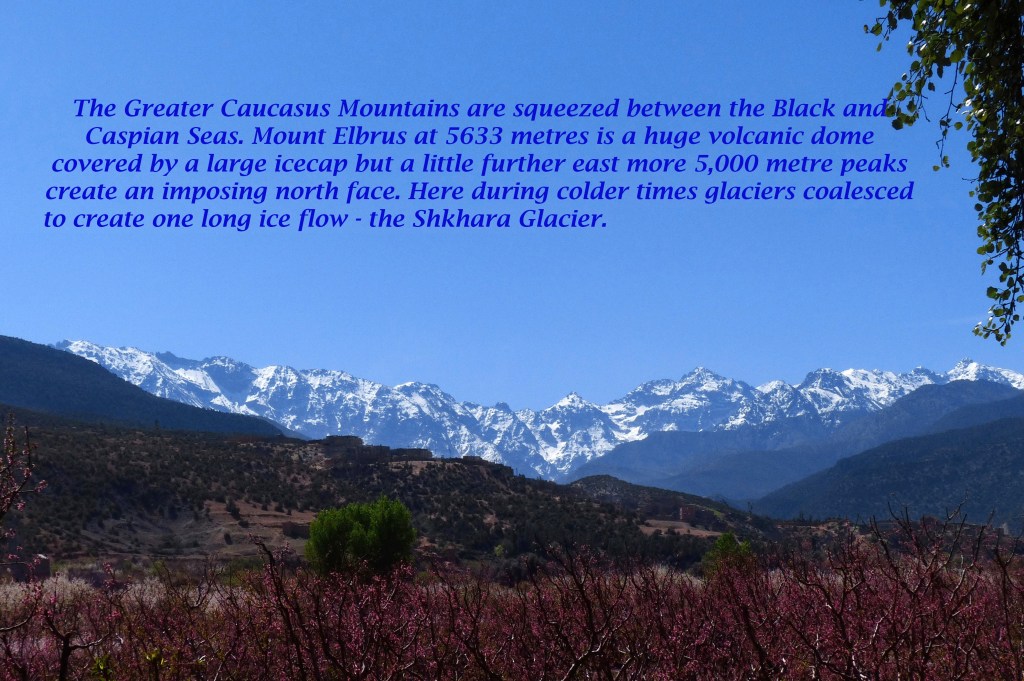
The Greater Caucasus forms a barrier which traverses this neck of land and affects the weather and climate of the whole region. The north side of the range is exposed to icy winds from the northeast while to the south the mountains offer some protection from this chilling cold. The Lesser Caucasus meanwhile create an east west barrier to moisture coming in from the west over the Black Sea. This barrier extends north to include the highest mountains of not just the Greater Caucasus but the whole of Europe. Together these two ranges of mountains create a rain shadow to the east along the Caspian Sea coast of Azerbaijan and extending north.
This makes the Islamic republic quite different in appearance from its Christian neighbour of Georgia to the west facing the Black Sea. The Caspian coast of Azerbaijan gets only a third of the rain of Georgia’s Black Sea coast, while the crucial winter rains in the east only amount to a quarter of those west of the Lesser Caucasus. This is mitigated however by the drainage of water from west to east, along the Kura and Aras rivers (1,500 and 1,000 kilometres long respectively), which meet on the parched plains of Azerbaijan so that precipitation from both the Greater and Lesser Caucasus helps irrigate this otherwise rain starved area. The headwaters of the Euphrates (Firat and Murat rivers) in the nearby mountains of eastern Anatolia are equally crucial in irrigating the hot arid plains of Iraq far to the south.
 Yggdrasil and Middle World